Art
Symbolism of Marc Chagall
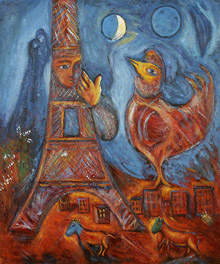 Chagall is considered one the greatest artists of the 20th century. His work is all but impossible to categorize. Some say Fauvism some say Cubism. He was an artist capable of such originality that to try to fit his work into a specific genre would demean the value and power of what he was able to achieve.
To celebrate the wonderful works of Chagall I have comprised a list of objects found in his works. Every one of these objects holds symbolic and spiritual meanings.
See for yourself what Chagall tried to convey in his great oil paintings.
- Cow: life par excellence – milk, meat, leather, horn, power.
- Tree: another symbol of life.
- Rooster: fertility, often painted together with lovers.
- Bosom: fertility of life – Chagall had great respect for Women and it is shown in his art.
- Fiddler: In Chagall’s village Vitebsk the fiddler made music at major events such as weddings and holidays.
- Herring – a flying fish: Commemorates Chagall’s father who worked in a fish factory.
- Pendulum Clock: time, and modest life.
- Candlestick: two candles symbolize the Shabbat and the life of devout Jews.
- Windows: Chagall’s Love of Freedom.
- Houses of Vitebsk: Feelings for his homeland as most of these paintings were done during his years in Paris.
- Scenes of the Circus: Creativity and Joy.
- Horses: Freedom.
- The Eiffel Tower: Up in the sky, another symbolic metaphor for freedom.
After I researched Chagall symbolism it was cool to look back at his paintings and try and guess what was going through his mind when he painted them. Truly marvelous, truly glorious Marc Chagall paintings.

About the Author Amitai Sasson
Amitai Sasson of overstockArt.com is an art world traveler on a mission to seek out the beauty and passion of the art world. As an avid enthusiast of art and oil paintings, he contributes to ArtCorner.com as Chief editor and writer.